Cavitation is very harmful to pumps! So, what is cavitation? What are the hazards? Which parts are prone to cavitation?
What is cavitation?
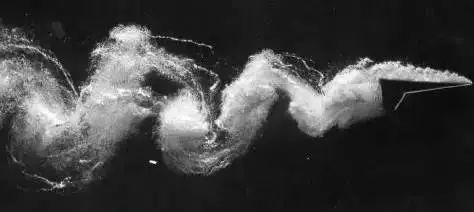
When the local pressure of the liquid in the pump drops to the critical pressure, bubbles will be generated in the liquid. Cavitation is the entire process of bubble aggregation, movement, splitting, and elimination. The critical pressure is generally close to the vaporization pressure.
The hazards of cavitation
A. Corrosion of overcurrent components
There are two reasons for corrosion:
Firstly, due to the high-frequency (600-25000HZ) impact generated by the bursting of bubbles, the pressure reaches up to 49Mpa, resulting in mechanical erosion of the metal surface;
Secondly, due to the release of heat during vaporization and the action of a temperature difference battery, hydrolysis occurs, resulting in oxygen oxidation of the metal and chemical corrosion.
B. Degradation of pump performance
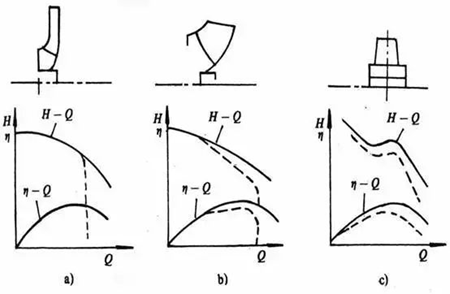
During pump cavitation, the energy exchange inside the impeller is disturbed and destroyed, and the external characteristics are represented by Q-H curve, Q-P, Q- η The curve drops, and in severe cases, it can interrupt the liquid flow in the pump and prevent it from working.
For low specific speeds, due to the narrow and long flow channels between the blades, once cavitation occurs, bubbles fill the entire flow channel, and the performance curve will suddenly decrease.
For medium to high specific speeds, the flow path is short and wide, so there is a transition process for bubbles to develop and fill the entire flow path. The corresponding performance curve starts with a slow decline, and then increases to a certain flow rate before sharply decreasing.
NPSH and suction head
When the pump is working, the liquid at the inlet of the impeller will generate vapor under a certain vacuum pressure. The vaporized bubbles will cause erosion on the metal surface of the impeller under the impact motion of the liquid particles, thereby damaging the impeller and other metals. At this time, the vacuum pressure is called vaporization pressure, and the cavitation margin refers to the excess energy per unit weight of liquid at the pump inlet that exceeds the vaporization pressure, expressed in meters and expressed in (NPSH) r.
The suction head is the necessary NPSH Δ h: The vacuum degree that the pump is allowed to absorb liquid, which is the allowable installation height of the pump, in meters. Suction lift=standard atmospheric pressure (10.33 meters) - NPSH - safety margin (0.5 meters) - standard atmospheric pressure energy pressure pipeline vacuum height 10.33 meters.
For example, if the cavitation margin of a certain pump is 4.0 meters, calculate the suction head Δ H
Solution: Δ H=10.33-4.0-0.5=5.83 meters
Respective units and letters of measurement:
NPSH refers to the difference between the total head of the liquid at the pump inlet and the pressure head at which the liquid vaporizes, expressed in meters (water column) and (NPSH). It can be divided into the following categories:
• NPSHa - device cavitation allowance also known as effective cavitation allowance, the larger the less prone to cavitation;
• NPSHr - pump cavitation margin, also known as the necessary cavitation margin or pump inlet dynamic pressure drop, the smaller the anti-cavitation performance is better;
• NPSHc - critical cavitation allowance, which refers to the cavitation allowance corresponding to a certain value of pump performance decline;
• [NPSH] - The allowable cavitation allowance is the cavitation allowance used to determine the conditions of pump use, usually [NPSH]= (1.1 ~ 1.5) NPSHc.
The difference between NPSHa and NPSHr
The cavitation margin is divided into effective cavitation margin NPSHa and necessary cavitation margin NPSHr. The required NPSH of a pump is a characteristic of the pump and is determined by design, while the effective NPSH of the pump is determined by the process pipeline.
For a given pump, the required NPSHr at a given speed and flow rate is called the required NPSHr. Also known as the pump's cavitation margin, it is the specified cavitation performance parameter that the pump needs to achieve.
NPSHr is related to the internal flow of the Emulsification pump,Lobe Pumps,Rotary Lobe Pumps and is determined by the head of the pump itself. Its physical meaning is to indicate the degree of pressure drop of the liquid at the pump inlet, which is to ensure that the pump does not experience cavitation. It is required that the unit weight of liquid at the pump inlet has excess energy exceeding the vaporization pressure head.
The NPSH must be independent of the device parameters and only related to the motion parameters (vo, wo, wk, etc.) of the pump inlet, which are determined by geometric parameters at a certain speed and flow rate. This means that NPSHr is determined by the geometric parameters of the pump itself (suction chamber and impeller inlet).
For a given pump, regardless of the medium (except for viscous media that affect velocity distribution), when flowing through the pump inlet at a certain speed and flow rate, there is the same pressure drop due to the same speed, that is, the NPSHr is the same. So NPSHr is independent of the properties of the liquid (without considering thermodynamic factors).
The smaller the NPSHr, the smaller the pressure drop. The NPSHa that the device must provide is required to be small, thus the better the anti cavitation performance of the pump. Therefore, r represents required and is determined by the pump body, specifically related to speed, impeller form, etc;
Effective cavitation margin refers to the cavitation margin determined by the installation conditions of the pump, commonly expressed as NPSHa. Also known as device cavitation margin, it is the excess energy per unit weight of liquid provided by the suction device at the pump inlet that exceeds the vaporization pressure head.
The larger the NPSHa, the less likely the pump is to experience cavitation. The size of effective NPSH is related to device parameters and liquid properties (p, PV, etc.). Because the hydraulic loss of the suction device is proportional to the square of the flow rate, NPSHa decreases as the flow rate increases.
Therefore, A represents available and available, which is determined by the system and pipelines and must be rigorously calculated;
To ensure that the pump does not cavitate, NPSHa must be larger than NPSHr. The specific size depends on the experience of various types of pumps. Generally, an excess head of 0.5-1m is added to the required NPSH of the pump as the allowable NPSH.
As a non-Newtonian fluid transportation equipment research and manufacturing enterprise, Durrex Pumps has obtained 56 national patents, including 11 invention patents. The company has developed rotor pumps, Homogeneous pumps, grinding pumps, Rubber Lobe pumps, magnetic pumps and other products, providing fluid transportation equipment and technical services to more than 10000 clients worldwide.