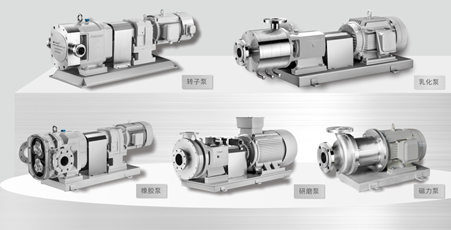
Pumps are the second most commonly used industrial equipment after motors. Currently, millions of pumps worldwide are operating, conveying thousands of liquids. Choosing a suitable pump among the many types of pumps available is a very complex task. The selection of pumps is largely a process of matching the capabilities of a specific pump with system requirements and the characteristics of the liquid to be pumped. In this article, we will start with the properties of the pumped liquid, from the perspective of user needs, and then discuss the specific pump selection.
Basic requirements:
In any application, the first step is to understand the basic requirements of the user for the pump. For example, inlet conditions, required flow rate, pressure difference, temperature, and fluid characteristics, such as viscosity, abrasiveness, shear sensitivity, and corrosiveness, must all be determined in order to select a good pump.
The pump must operate well under the correct suction conditions. In fact, the biggest problem encountered by pumps can be traced back to poor suction conditions. Due to the fact that the pump's ability to push liquid is much stronger than its ability to absorb liquid, inlet conditions should be maintained within the pump's capacity range.
The pressure difference is also a crucial part, especially from the perspective of energy conservation and pump service life. Using smaller pipe diameters and longer pipe lengths can reduce the initial cost of the system, but it may also lead to higher pressure differences in the pump. This higher pressure difference will be converted into energy consumption and may shorten the service life of the pump, which means higher operating costs and lower efficiency.
The required liquid characteristics are usually known, and the important thing is to understand how a given pump affects these characteristics. The vast majority of users are willing to keep the liquid discharged by the pump in the same condition as when it enters the pump. The compatibility of materials, viscosity, shear sensitivity, and the presence of specific substances or solids are all of great significance for the correct selection of pumps.
Once the basic requirements are met and the liquid characteristics are known, the pump selection can begin. Pumps are usually divided into two basic categories: kinetic pumps (the largest type being centrifugal pumps) and positive displacement (PD) pumps. According to data from the US Department of Commerce, approximately 70% of all pump sales are kinetic pumps, while the remaining 30% are volumetric pumps. When choosing a pump, the first step is to determine which one is more suitable for your needs, centrifugal pump or volumetric pump.
Due to the fact that the mainstream industrial pumps are centrifugal pumps, many people will first consider centrifugal pumps. The cost of centrifugal pumps is usually lower than that of volumetric pumps, and they are also the correct pump type to use in many cases. Each pump agitates the fluid in its own way, and each pump has its own unique operating characteristics and curves. But importantly, centrifugal pumps can affect the flow rate of the liquid, resulting in a certain amount of pressure at the discharge port. On the contrary, when a volumetric pump agitates liquid, it first obtains a specific amount of liquid and delivers it from the suction port to the discharge port. For centrifugal pumps, pressure is formed first and then flow is generated. For a positive displacement pump, it first forms flow and then causes pressure to appear.
Performance
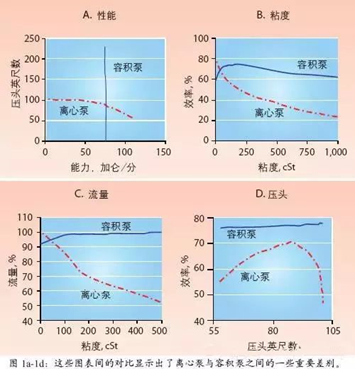
In order to select the most suitable type from various pumps, it is important to understand the differences in operating characteristics between these two types of pumps. When viewing its performance chart (Figure 1a), you can see how different its working principles are. Centrifugal pumps have variable flow rates that depend on pressure (or head), while volumetric pumps have more or less constant flow rates that are independent of pressure.
Viscosity
Viscosity plays an important role in the mechanical efficiency of pumps. Due to the centrifugal pump operating at the motor speed, its efficiency will decrease with the increase in viscosity caused by the increase in friction loss inside the pump. Please note that as the viscosity increases, the efficiency of the centrifugal pump decreases rapidly (Figure 1b).
Another major difference lies in the effect of viscosity on pump capacity. In the flow meter (Figure 1c), you will notice that a centrifugal pump will experience a decrease in flow rate as the viscosity increases, while a volumetric pump will actually increase flow rate accordingly. This is due to the higher viscosity of the liquid filling the gaps in the volumetric pump, resulting in higher volumetric efficiency. Figure 1c only shows the effect of viscosity on pump flow rate. Please remember that there may also be an increase in pipeline losses within the system. This means that the flow inside the centrifugal pump will further decrease as the pump differential pressure increases.
Efficiency
When considering the impact of differential pressure on the mechanical efficiency of pumps, kinetic energy pumps and volumetric pumps also exhibit different characteristics. Figure 1d shows how the efficiency of a pump is affected by the increasing pressure. For volumetric pumps, efficiency actually improves with the increase of pressure, while centrifugal pumps have an optimal efficiency point (BEP). On both sides of this point, the overall pump efficiency will significantly decrease.
Entry condition
These two types of pumps have significantly different requirements for inlet conditions. A centrifugal pump requires a certain amount of liquid in advance to form a pressure difference. A dry pump without liquid cannot start on its own. Once the operation is started, the centrifugal pump needs to meet the clear inlet pressure requirements recommended by the manufacturer.
Due to the fact that the volumetric pump agitates the liquid through the expansion and contraction of the liquid volume, a negative pressure situation will form at the inlet, so the volumetric pump can start filling on its own. In some cases, this is the only determining factor for choosing a positive displacement pump or a centrifugal pump.
Sum up
In general, when the viscosity exceeds 150 cP, it is necessary to be able to predict the flow rate over a wide range, or when it is desired that the pump can start filling on its own, a volumetric pump can be considered. When choosing between centrifugal pumps and volumetric pumps, consideration should also be given to energy consumption, as there may be significant differences in energy consumption between these two types of Emulsification pump,and lobe pumps,etc. This is particularly important for situations where the flow rate is below 100 gallons per minute, where the decrease in centrifugal pump efficiency will be greater.
Mastering the working principles of various pumps is a good starting point for selecting the correct model for a given application environment. Although the differences between various options may not be very clear, the basic differences in operation and capacity can be used to guide selection. Incorrect pump selection often leads to higher costs. Specifically, it will have adverse effects on downtime, lost production, maintenance costs, and energy consumption. Spending more time choosing the right and appropriate pump can minimize unnecessary costs and achieve higher long-term benefits.
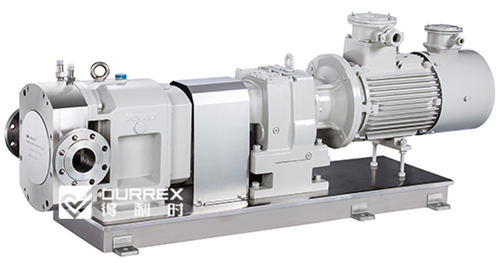
As a non-Newtonian fluid transportation equipment research and manufacturing enterprise, Durrex Pumps has obtained 56 national patents, including 11 invention patents. The company has developed Rotor Pumps, Homogeneous Pumps, grinding pumps, Rubber lobe pumps, magnetic pumps and other products, providing fluid transportation equipment and technical services to more than 10000 clients worldwide.